Is the Train From Paris to Switzerland Direct?
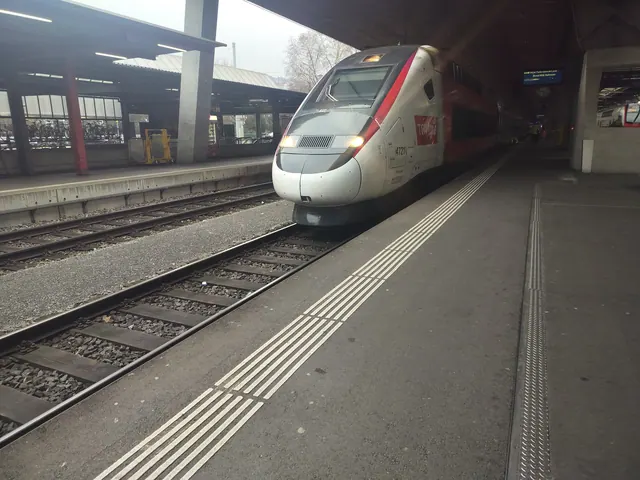
Yes, TGV Lyria, the high-speed train service run jointly by SNCF and SBB (the French and Swiss railways), sends direct trains from Paris to Basel, Zurich, Geneva and Lausanne. You board at Paris Gare de Lyon, find your reserved seat and stay put until the doors open in Switzerland.
France and Switzerland have been linked by rail since the earliest days of the railways, when the first international line into Switzerland ran from Strasbourg to Basel. Today's trains from Paris are rather quicker. The ones for Basel and Zurich race east across Burgundy at full speed on the high-speed line, then call at Mulhouse before crossing the border, while trains for Geneva swing south-east through Bourg-en-Bresse and Bellegarde and wind into the Jura hills.
Lausanne is the odd one out, with two routes of its own.
The exact travel time to each city and how many trains run daily are in the board at the top of this page, taken straight from the TGV Lyria and SBB timetables.
Why Take the Train Instead of Flying?
Look at the door-to-door picture rather than the time in the air. A flight means getting out to Charles de Gaulle or Orly, security queues, a liquids bag, and then another transfer from Zurich or Geneva airport into town. The train journey runs from one city centre to the next, and you can walk out of Zurich HB straight onto the Bahnhofstrasse.
- No airport security and no liquids rule, so pack your toiletries as you like
- City centre to city centre, with Swiss trains waiting in the same station
- Free Wi-Fi and power sockets at your seat, so the hours fly by
- Far lower carbon emissions than flying the same route
- Views of Burgundy, the Rhine plain and the Jura on the way
Paris to Zurich, Geneva, Basel or Lausanne?
Choose the Swiss city by where you're going next, not by which train is a few minutes quicker. Swiss trains leave the big stations every half hour or so in most directions, so your arrival city is really your doorway to a region.
| Arrive at | Calls on the way | From the window | Best gateway for |
|---|
| Basel SBB | Mulhouse, plus Dijon or Belfort-Montbéliard TGV | Burgundy farmland, then the Rhine plain | Bern, Interlaken, Lucerne |
| Zurich HB | The same stops, then Basel | Rolling Swiss countryside after the border | Lucerne, Chur, St Moritz, Graubünden |
| Geneva Cornavin | Bourg-en-Bresse, Nurieux, Bellegarde | Jura hills, gorges and forest | Montreux, Zermatt, Chamonix |
| Lausanne | Dijon, Dole, Frasne, Vallorbe (or via Geneva) | The high Jura, then the lake | Lavaux, Montreux, the GoldenPass |
Paris to Zurich: the hub of the Swiss network
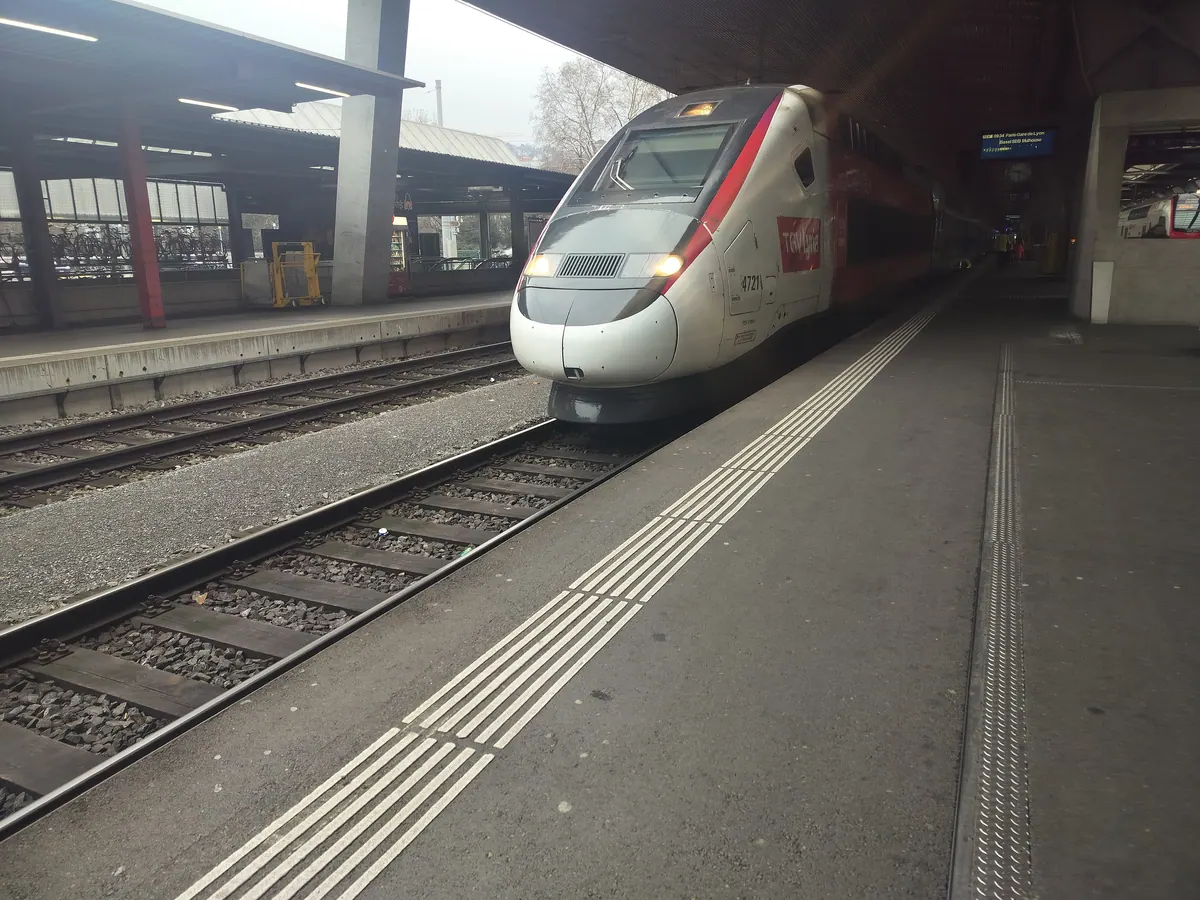
Paris to Zurich is the longest of the rides, but Zurich HB connects with almost everywhere. Between Paris and Zurich the TGV Lyria train calls at Dijon or Belfort-Montbéliard, then Mulhouse and Basel, before running the last stretch on Swiss track. Step off and you can be on the train from Zurich to Lucerne within minutes, or heading east to Chur, where the Glacier Express and Bernina Express begin.
Our guide to Zurich HB shows where the platforms, lockers and food are.
Paris to Geneva: the French-speaking end
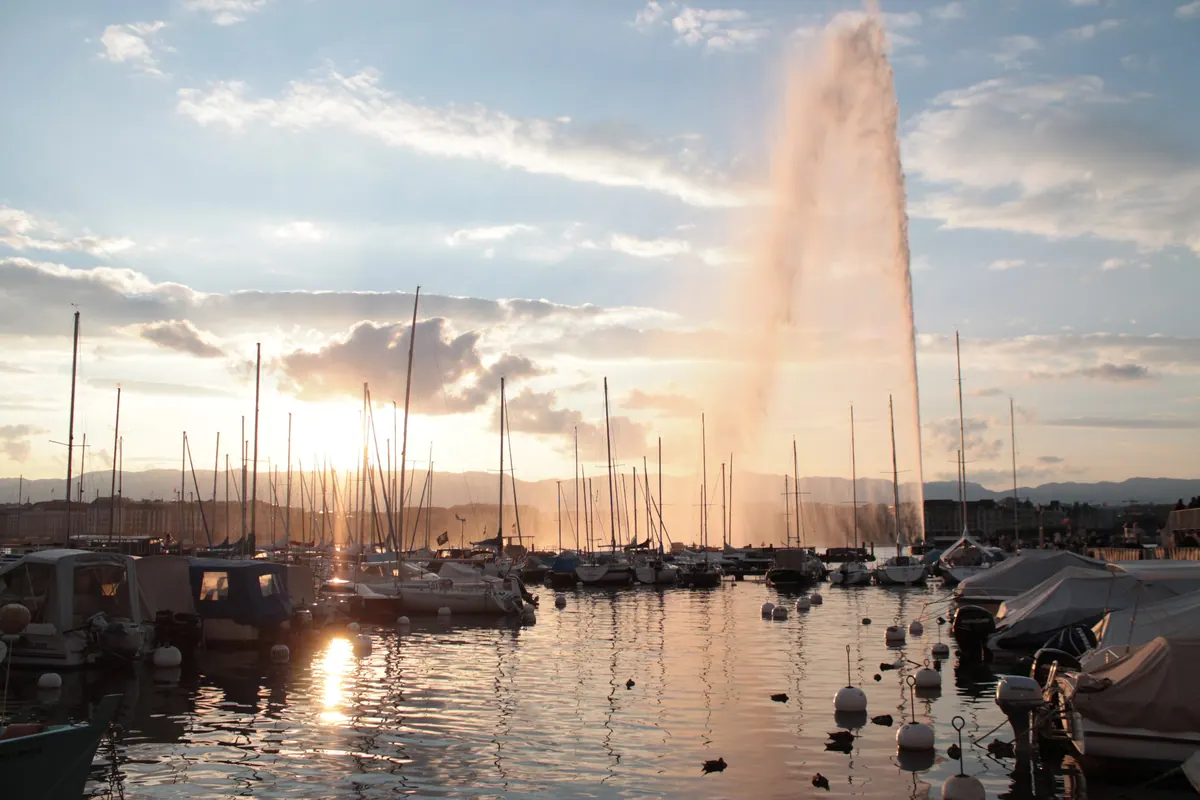
Geneva gets the most departures through the day, and the last hour is the prettiest of any Lyria route as the line threads the wooded valleys of the Jura. Cornavin station sits a short walk from the water and the Jet d'Eau. From here the train from Geneva to Montreux hugs the shore, and the Geneva to Zermatt train heads up the Rhône valley towards the Matterhorn.
Paris to Basel: the quickest way in
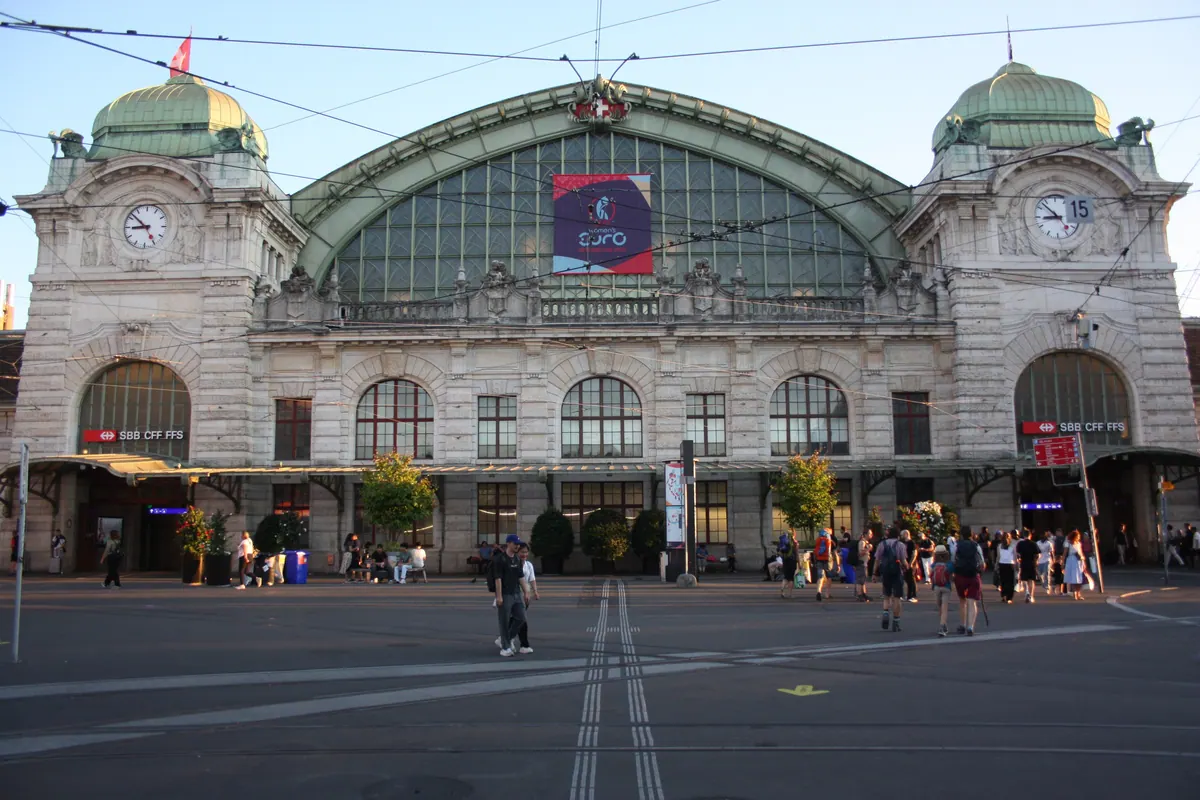
Basel is the first stop in Switzerland and the shortest ride from Paris. It suits anyone bound for the Bernese Oberland, as fast Swiss trains run on to Bern and down to Lake Thun, and the Basel to Interlaken train covers that final leg into the mountains around the Jungfrau.
Paris to Lausanne: for the vineyards and the GoldenPass
Lausanne is the stop for the Lavaux vineyard terraces and the quickest way onto the GoldenPass line from Montreux. Check which way your train goes when you book. The route through Frasne and Vallorbe crosses the high Jura, while the others come round via Geneva.
TGV Lyria also warns that some of those Geneva trains won't stop at Lausanne during engineering work in 2026, so make sure Lausanne is printed on your ticket.
Getting Ready at Paris Gare de Lyon
Every Lyria departure for Switzerland leaves from the Gare de Lyon in the 12th arrondissement, a grand old station with a clock tower you can spot from the street. Find your train on the screens, then scan the QR code on your ticket at the automatic gates to reach the platform. Don't cut it fine! Boarding closes a couple of minutes before departure, and after that the staff won't let you on.
Got time to spare? Le Train Bleu, the gilded Belle Époque restaurant upstairs in Hall 1, is a lovely spot for a coffee or a long lunch before you go. First class passengers can wait in the Salon Grand Voyageur lounge instead.
Starting in London, you'll come in on the Eurostar to Gare du Nord and need to cross Paris first. Our guide to the train to Switzerland from London walks you through that connection, including booking the Eurostar and TGV together.
What's It Like on Board the TGV Lyria?
All Lyria services use double-deck TGV trains, and they're comfortable rather than flashy. There's free Wi-Fi, power sockets at the seats and a cafe-bar coach selling hot and cold drinks, snacks and proper meals. You can also order food online before you travel and collect it on the train.
Which travel class?
- Standard is second class: a reserved seat, Wi-Fi and the cafe-bar, on the cheapest fares, which usually can't be exchanged or refunded.
- Première is first class, with wider seats, a choice of seat when you book, more flexible fares and access to the lounge at Gare de Lyon.
- Première Signature adds a welcome drink and a meal served at your seat, a quiet coach and free exchange onto any train that day.
Where to sit for the views
Ask for an upstairs seat. The upper deck sits higher above the trackside fences, the trolley only runs up there, and you walk between carriages at that level too. On the Geneva line the best scenery comes near the end, as the train drops through the Jura towards Lake Geneva. If you'd rather not carry a heavy case up the stairs, the lower deck has racks and toilets too.
Luggage
There's no check-in and nobody weighs your bags. Put cases on the racks at the end of each carriage or between the seat backs, and label everything with your name and phone number.
Booking Your Train Tickets
Tickets go on sale in batches, normally about six months in advance, and TGV Lyria fares work like airline fares: the earlier you book, the lower the price. SBB notes that Tuesdays, Wednesdays and Saturdays tend to be the cheapest days to travel. Book directly with TGV Lyria, through SNCF Connect, or with SBB, which can add a discounted connecting ticket for the Swiss leg.
Your seat reservation is built into the ticket, so there's nothing extra to buy. Interrail and Eurail pass holders are the exception and pay a reservation fare on top.
What about a Swiss Travel Pass? It only covers the Swiss side of the trip, so you'll buy the cross-border section separately and use the pass from your arrival station onwards. Our Swiss Travel Pass guide explains when it pays for itself, and the guide to Swiss train tickets covers the cheaper ways to pay as you go.
Crossing the Border and Heading Into the Alps
Switzerland is in the Schengen area, so there's no routine passport control on the train, though customs officers do make spot checks and UK travellers should always carry a passport. You'll notice the change when you step off. Swiss stations have no ticket gates, the platforms are spotless, and the onward trains are timed to connect with each other across the whole schedule.
From your arrival city the whole country opens up.
The MySwitzerland guide to trains from France to Switzerland sets out the TGV Lyria routes, and the SBB page on TGV Lyria lists the current classes and travelcard discounts. For ideas on what to ride once you're there, see our Swiss rail holidays and the Grand Train Tour of Switzerland, which strings the great panoramic trains into one loop.
Rather Leave the Tickets to Someone Else?
The TGV from Paris is the easy bit. The harder part is everything after it: booking Glacier Express and Bernina Express seats months ahead, moving cases between hotels, and lining up each change in towns you don't know. That's where an escorted holiday earns its keep. These tours fly from the UK rather than going via Paris, but once you land, a tour manager handles every rail day.
Travelsphere's The Best of Switzerland flies you into Zurich and home from Geneva. In between you'll ride the Bernina Express over the Bernina Pass to Tirano, the Glacier Express to Brig with lunch on board, and the GoldenPass to Lausanne, with a Holiday Director looking after reservations and bags. Our Best of Switzerland tour page goes through it day by day.
Prefer one base? Newmarket's Swiss Alpine Glories and the GoldenPass Train flies into Geneva and stays a week in Château-d'Oex, riding the GoldenPass line to Montreux and to Interlaken. For snow, Travelsphere's Winter in Switzerland stays in Interlaken and takes the GoldenPass Express down to Montreux.
The cards at the top compare every holiday side by side, or browse more Switzerland by train ideas.
Questions people ask
Which Paris station do trains to Switzerland leave from?
All TGV Lyria trains to Basel, Zurich, Geneva and Lausanne leave from Paris Gare de Lyon. If you arrive in Paris on the Eurostar at Gare du Nord, you'll need to cross the city to Gare de Lyon first.How long does the journey take?
Basel and Geneva are a little over three hours from Paris, Lausanne a bit longer, and Zurich about four hours. The board at the top of this page has the exact journey time for each city. Allow extra time for your onward Swiss connection if you're heading into the mountains.Do I need a seat reservation on TGV Lyria?
Yes, reservations are compulsory, but they're included in every normal ticket, and only rail pass holders pay a separate reservation fare.Is there a passport check between France and Switzerland?
Both countries are in the Schengen area, so there's no routine passport control on the train. Customs officers do make spot checks, and UK travellers should always carry a valid passport.Can I use a Swiss Travel Pass on the TGV from Paris?
Only on the Swiss part of the trip. Buy the cross-border ticket separately and start using the pass from the Swiss station where you get off. A Swiss Half Fare Card, on the other hand, earns a discount on the cross-border section when you book with SBB.Which route is the most scenic?
The Geneva line and the Lausanne route via Vallorbe both cross the Jura, so sit upstairs on either for hills, gorges and forest in the final hour.Can I get from Paris to the Swiss Alps in one day?
Yes. Take a morning TGV to Basel or Geneva and change onto a Swiss train, and you can reach Interlaken, Montreux or even Zermatt by the evening.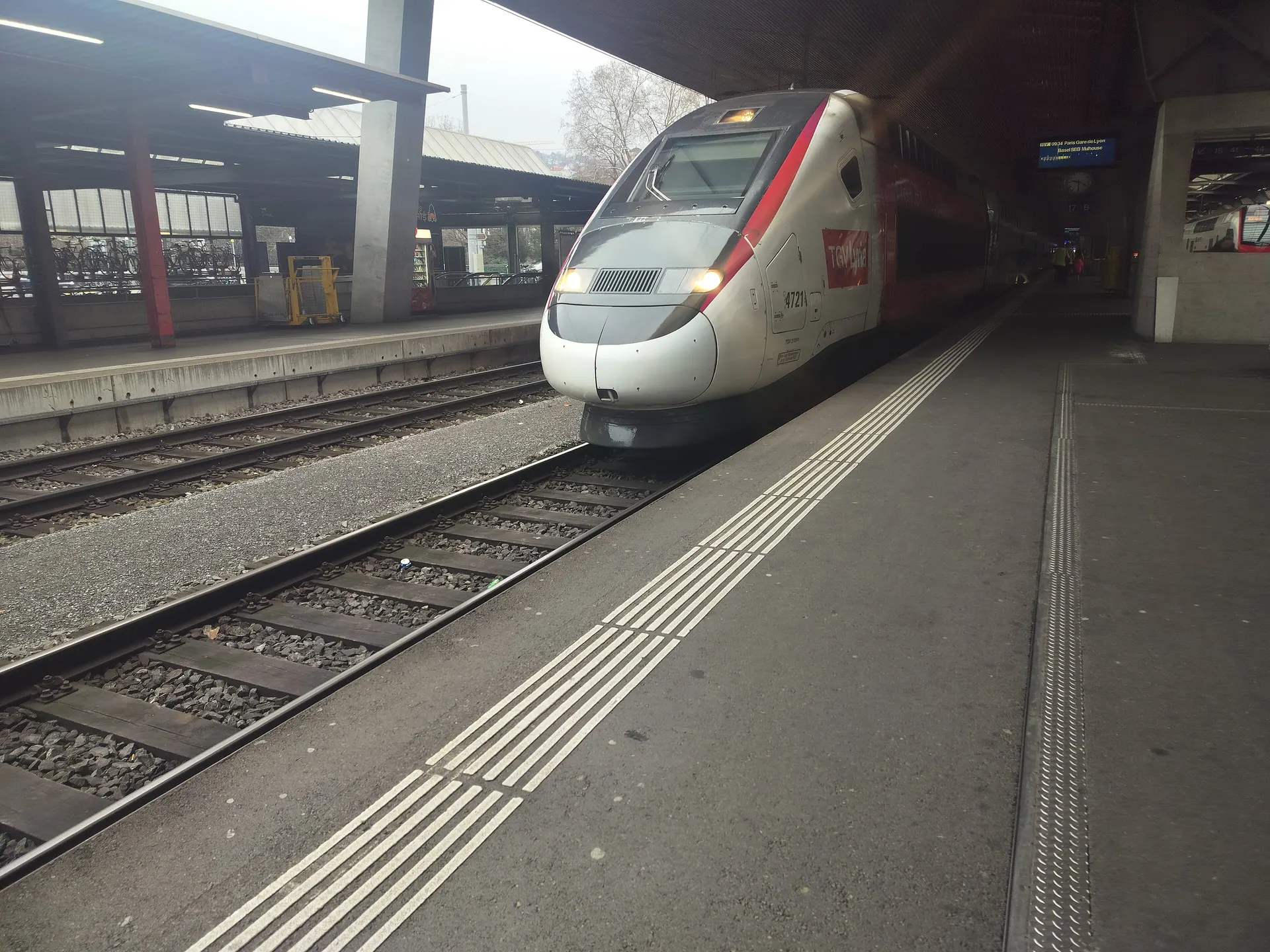
 Travelsphere